
Pre-Listing Inspection for Lake Murray Homes: Dock, Seawall, Shoreline — What to Check Before You List
Lake Murray, SC - The Patrick O’Connor Team
Selling a home in a typical Lexington subdivision? A standard pre-listing inspection covers the roof, HVAC, foundation, and electrical. Selling a home on Lake Murray? You need all of that, plus an entirely separate checklist that most agents and inspectors never think about until a buyer’s inspector finds a problem and your deal starts unraveling.
I’ve watched too many Lake Murray sellers lose negotiating leverage — or worse, lose a buyer entirely — because something on the waterfront side of the property came up during due diligence that nobody bothered to check before listing. A soft dock board. A cracked seawall cap. Dock electrical that doesn’t meet current code. Erosion behind the rip-rap that’s been quietly worsening for three years.
These aren’t small things. On a waterfront home where the dock and water access are a major part of the value, these issues directly affect what buyers are willing to pay and how aggressively they negotiate. The good news is that every one of them can be identified and addressed before you ever go on the market — if you know what to look for.
Lake Murray, SC - The Patrick O’Connor Team
Why a Standard Home Inspection Isn’t Enough
Most home inspectors are trained to evaluate the structure from the foundation up through the roof. That’s their scope. They’re not dock builders, marine electricians, or shoreline engineers. A general inspector will walk onto your dock, maybe note that it exists, and move on. They’re not checking piling integrity below the waterline, they’re not testing GFCI protection at every dock outlet, and they’re not evaluating whether your seawall is showing early signs of failure.
A buyer who’s serious about a Lake Murray waterfront property, especially at the price points we’re seeing today, will often bring in a specialized dock or marine inspector during their due diligence period. If that inspector finds something your listing agent should have caught, the conversation shifts from “we love this home” to “we need $30,000 off the price.”
The pre-listing inspection is your opportunity to control that narrative.

Lake Murray, SC - The Patrick O’Connor Team
The Dock: Your Most Visible (and Most Scrutinized) Asset
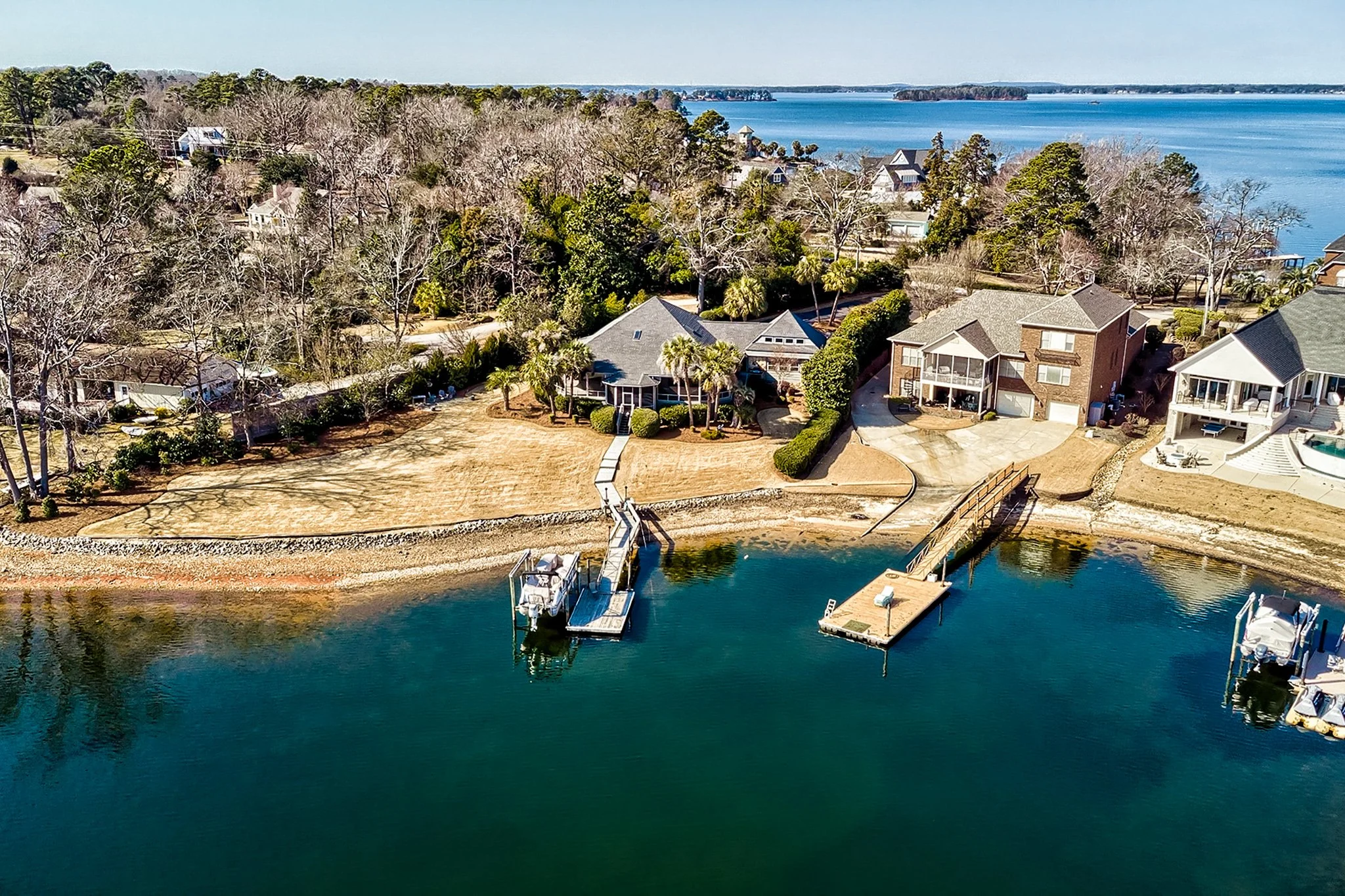
The dock is often the first thing a buyer evaluates on a waterfront property, and it’s the feature most likely to generate inspection concerns. Here’s what to check:
Structural integrity. Walk every board. Press on decking with your foot and feel for soft spots, especially around the edges where boards meet the frame. Check the connection points between the dock and the shore — this is where settling, wave action, and seasonal water level changes cause the most stress. If your dock has a gangway or floating section, check the hinges and cables.
Pilings. If your dock is on pilings, look for visible deterioration at the waterline. Wood pilings rot from the outside in, and the damage is often worst right at the point where the water meets the air. If you can see soft wood, peeling layers, or marine growth buildup, a buyer’s inspector will flag it. Steel pilings should be checked for rust and corrosion.
Electrical. This is the single most important safety item on a Lake Murray dock. Every outlet on the dock should be GFCI-protected, the wiring should be properly rated for marine environments, and the electrical panel feeding the dock should have appropriate breaker protection. Dock electrical issues don’t just kill deals — they’re a genuine safety hazard. I strongly recommend having a licensed electrician inspect the dock wiring before listing. If your dock has a boat lift, the lift motor and electrical connections need to be inspected as well.
Boat lift condition. If you have a boat lift, test it. Run it up and run it down. Check the cables for fraying, the motor for unusual noise, and the cradle or bunks for wear. A functioning boat lift adds real value. A broken one raises questions about what else has been neglected.
Permit compliance. Every dock on Lake Murray requires a permit from Dominion Energy. Make sure your current dock configuration matches what’s permitted. If you’ve made modifications — added a boat lift, extended the dock, changed the configuration — without updating the permit, this needs to be resolved before listing. Buyers’ attorneys will check this during closing, and a permit discrepancy can delay or complicate the transaction.
Lake Murray, SC - The Patrick O’Connor Team
The Seawall and Shoreline: What’s Happening Below the Surface
Not every Lake Murray home has a seawall, but many do — especially homes in areas with steeper shorelines or more wave exposure. Even homes without a formal seawall need their shoreline evaluated.
Seawall condition. Walk the full length of your seawall and look for cracks, especially horizontal cracks that suggest lateral pressure from the soil behind the wall. Check the cap (the top of the wall) for separation or shifting. Look at the base where the wall meets the water — if soil is washing out underneath, that’s a sign of undermining that will only get worse. Concrete seawalls, vinyl sheet pile walls, and rip-rap all have different failure modes, and each should be evaluated by someone who understands them.
Erosion. Walk your shoreline and look for areas where soil is visibly washing away, where tree roots are exposed, or where the ground has settled noticeably. Erosion is progressive — it doesn’t fix itself. Minor erosion can be addressed with rip-rap, plantings, or grading. Major erosion may need professional engineering and can significantly affect property value if left unaddressed.
Drainage patterns. How does rainwater move across your property toward the lake? If water is channeling through specific paths and cutting into the bank, that’s an erosion accelerator. French drains, swales, or regrading can redirect water, but these are things to address before a buyer’s inspector notes them.
Rip-rap. If your shoreline is protected by rip-rap (loose stone), check that it’s still intact and hasn’t shifted or settled below the waterline. Rip-rap that’s sunk or been displaced by wave action isn’t doing its job. Replenishing rip-rap before listing is one of the highest-return investments you can make on a waterfront property — it’s visible, it signals maintenance, and it removes a buyer concern.
Lake Murray, SC - The Patrick O’Connor Team
The House: Waterfront-Specific Concerns Beyond the Standard Inspection
In addition to the typical inspection items every home gets evaluated on, Lake Murray homes have a few property-specific concerns worth checking early:
Moisture and humidity. Homes near the water are exposed to more moisture than inland properties. Check crawl spaces, basements, and lower-level rooms for signs of mold, mildew, or excessive humidity. Make sure your vapor barrier is intact, your dehumidifier is working (if you have one), and your HVAC system is properly managing humidity levels. A musty smell during a showing is a deal-killer.
Exterior materials. Lake-facing siding, trim, and decking take more weather punishment than the road-facing side of the house. Walk the lake side of your home and look for peeling paint, rotting trim, warped decking, and deteriorating caulk around windows and doors. These are inexpensive fixes that dramatically change a buyer’s first impression when they walk around to see the water.
Outdoor living spaces. Screened porches, covered patios, outdoor kitchens, fire pits — these are selling features on a lake home, but only if they’re in good condition. Screen tears, sagging porch ceilings, rusted grill components, and cracked pavers all register with buyers even if they don’t say anything. A pre-listing walkthrough of every outdoor space with a critical eye will catch these.

Lake Murray, SC - The Patrick O’Connor Team
My Recommendation: The Pre-Listing Waterfront Walkthrough
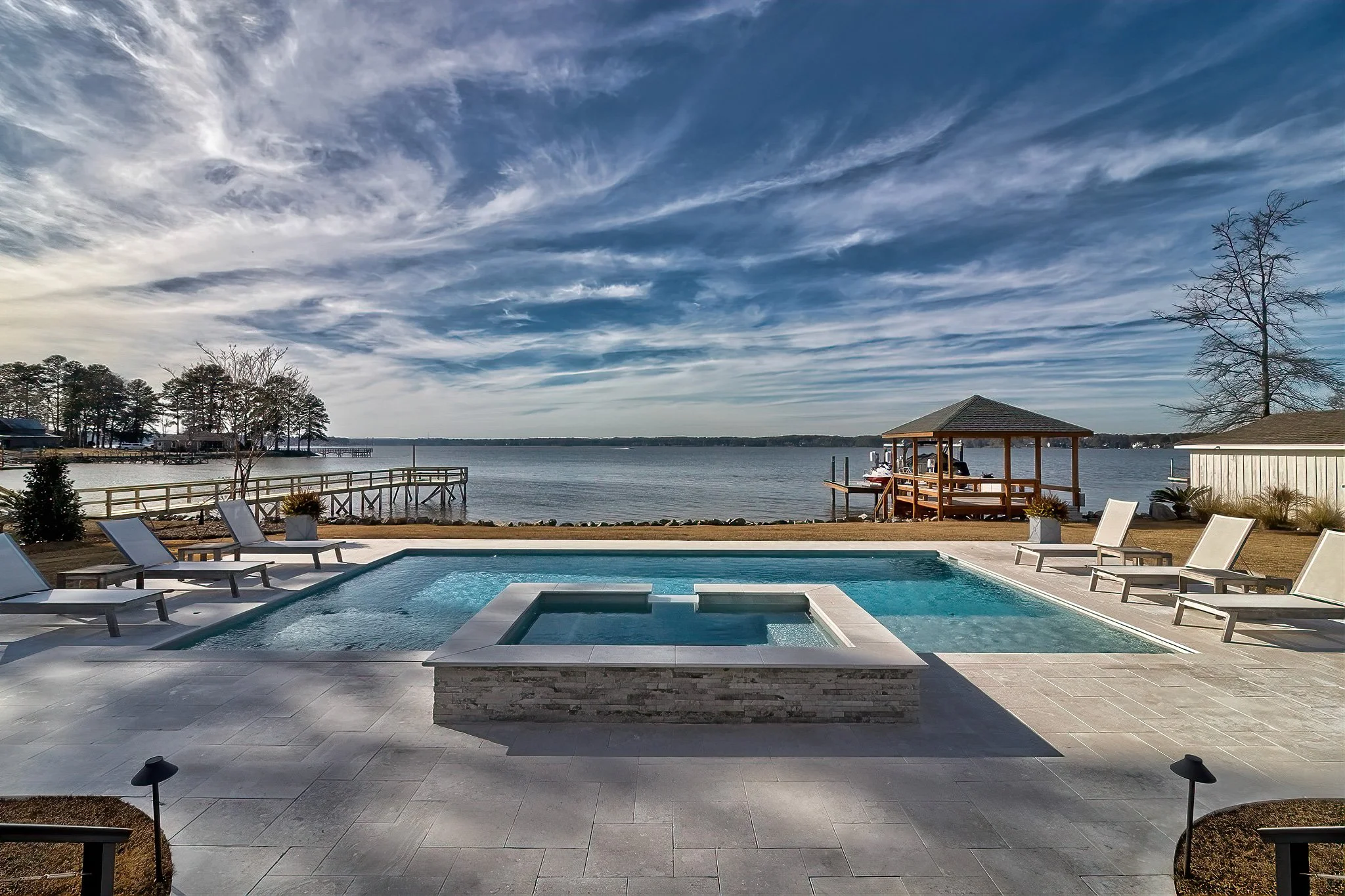
Before I bring a photographer to any Lake Murray listing, I walk the entire property with the seller — dock, shoreline, seawall, outdoor spaces, and the home itself. I’m looking at it through the eyes of the buyer who’s going to spend $700,000 or $1.2 million on this property. What will they love? What will concern them? What will their inspector flag?
This isn’t a formal inspection — it’s a strategic assessment. Based on what I see, I’ll recommend whether to bring in a dock specialist, a marine electrician, or a shoreline contractor before we list. Sometimes the answer is “you’re in great shape, let’s go.” Sometimes it’s “let’s spend $2,000 on these three things now and save ourselves a $25,000 negotiation later.”
That’s the value of a pre-listing inspection on Lake Murray. It’s not about finding problems. It’s about eliminating surprises.
Lake Murray, SC - The Patrick O’Connor Team
The Bottom Line
On Lake Murray, the waterfront is the product. The dock, the seawall, the shoreline, the water depth, the view — these are the features your buyer is paying a premium for. If those features have unaddressed issues, you’re handing the buyer a reason to negotiate your price down or walk away entirely.
A thorough pre-listing inspection that covers the full waterfront picture puts you in control of the transaction from day one. You know the condition of your property, you’ve addressed the fixable issues, and you can present your home with confidence.
If you’re getting ready to sell your Lake Murray home, reach out and let’s schedule a walkthrough. I’ll give you an honest assessment of what needs attention and what’s ready to go.

Lake Murray, SC - The Patrick O’Connor Team
About Patrick O’Connor at Coldwell Banker Realty.
Patrick O'Connor is the founder and leader of The Patrick O'Connor Team at Coldwell Banker, specializing in real estate across the SC Midlands including Lake Murray real estate. As a top realtor, he has assisted over 1,600 families in buying and selling homes and is recognized as the #1 Coldwell Banker team in South Carolina, Patrick brings unparalleled expertise on Lake Murray and in the Midlands of South Carolina real estate market, earning accolades for his dedication and success in the industry.

Lake Murray, SC - The Patrick O’Connor Team
Frequently asked questions
Why isn’t a standard home inspection enough on Lake Murray?
General inspectors cover roof, HVAC, foundation, and electrical. They rarely check piling integrity below the waterline, GFCI at every dock outlet, or early seawall failure. A buyer’s marine inspector can turn “we love this home” into a $30,000 price cut.
What should I check on the dock and shoreline?
Walk every board for soft spots; inspect gangway hinges and cables; look at wood pilings at the waterline and steel for rust. Every dock outlet should be GFCI-protected with marine-rated wiring. Confirm the current dock matches the Dominion Energy permit, including any added lift or extension. On seawalls, look for horizontal cracks, a shifting cap, and soil washing out at the base.
When should the pre-listing waterfront walkthrough happen?
Before photography. The post’s example: spend $2,000 on three items now rather than a $25,000 negotiation later. Also check crawl-space moisture, lake-facing trim, and outdoor living spaces. Call The Patrick O’Connor Team at 803-243-0224.