
Lexington SC Homes with Acreage: A Buyer's Guide
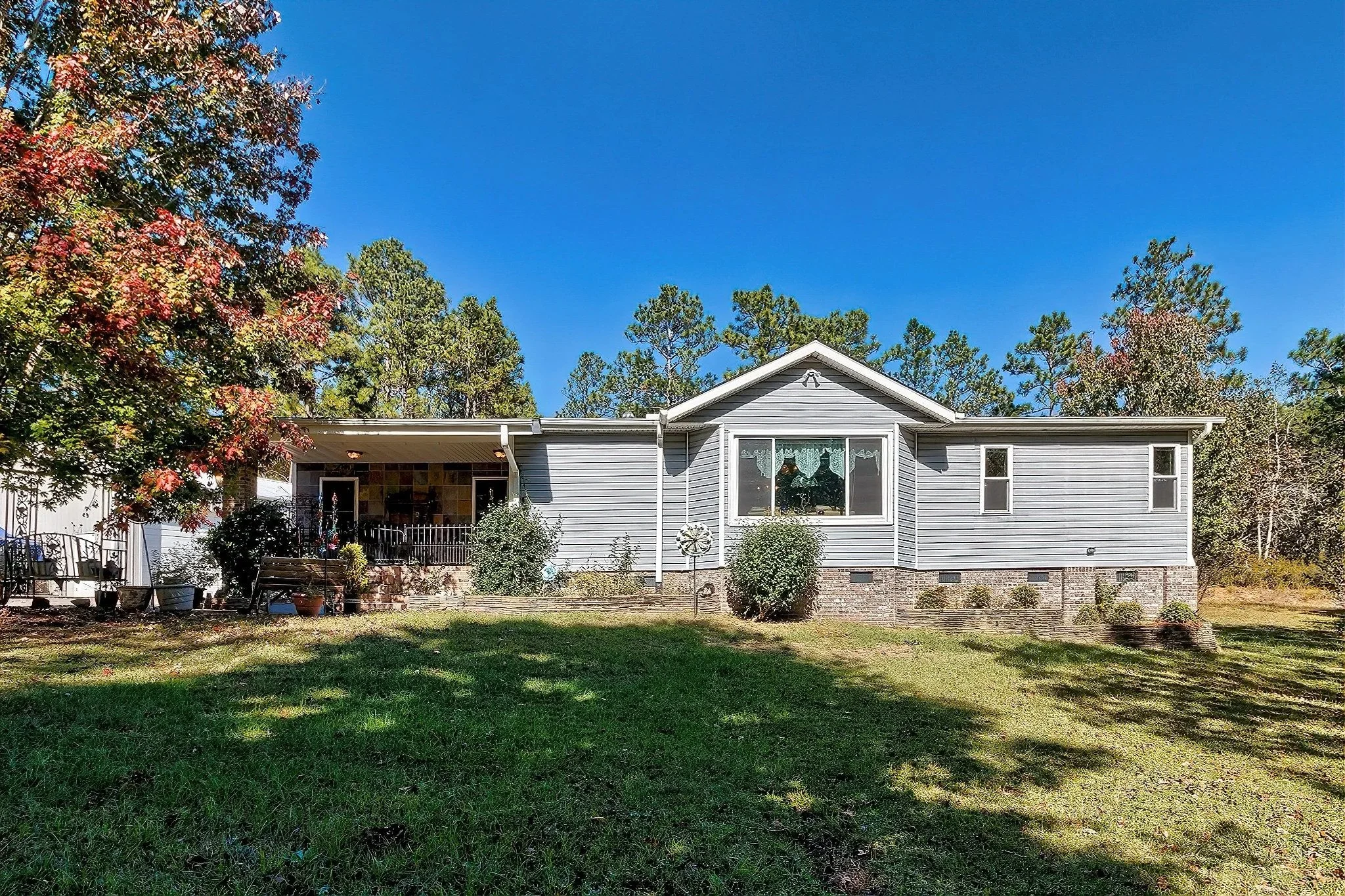
Lexington SC homes with acreage are actively available right now, ranging from raw land parcels under $100K to fully improved luxury estates above $1.8M, spread across ZIP codes in Gilbert, Pelion, Chapin, Leesville, and central Lexington. Buyers who understand where inventory concentrates across the county, which rural infrastructure questions to ask before making an offer, and how financing works for these properties can move with real confidence in this market.
This guide covers the full picture: current pricing benchmarks, geographic hotspots across Lexington County, zoning and septic realities, equestrian potential, and financing options sized for rural properties. It reflects the same hyper-local knowledge the Patrick O'Connor Team at Coldwell Banker Realty applies every day helping buyers across Lexington County find acreage lots where their goals and the land's capabilities genuinely match.
Key takeaways
Wide price range: Acreage properties in Lexington County span from roughly $50,000 for a 2.8-acre raw parcel to over $1.8M for a luxury estate, giving buyers at almost every budget a realistic entry point.
Location drives value: Gaston and Pelion offer the most affordable entry points; Chapin and central Lexington carry a premium tied to schools, commute times, and lake proximity.
Zoning and septic come first: Confirming a parcel's zoning district and SCDES soil suitability before making an offer is one of the most important steps in any rural land purchase. Skipping it is a frequent and costly mistake.
Equestrian use requires verification: Not all rural residential parcels in Lexington County automatically permit horses or agricultural operations; a written zoning determination is essential before purchasing.
Multiple loan products exist: USDA Guaranteed loans, conventional mortgages, and Farm Credit land loans each fit different buyer situations; get quotes from at least two lender types before committing.
Due diligence is non-negotiable: A survey and perc test on unimproved lots are essential steps before any offer is final.
What does acreage actually cost in Lexington, SC right now?
Land-only parcels vs. homes on acreage
The spread on active listings is genuinely wide. On the land-only side, parcels currently run from a 2.8-acre parcel on Mineral Springs Road at $50,000 to a nearly 31-acre tract on Morgan Drive at $1,250,000, with mid-range examples like a 6.6-acre lot on Roper Mountain Court at $180,000 and a 3.93-acre Lee Kleckley Road parcel at $235,000 sitting solidly in between. That range reflects differences in location, road access, utility availability, and development readiness, not just raw acre count.
Lexington SC homes with acreage push the top of the market higher still. A listing at 265 Will Dent Road offers a four-bedroom, seven-bathroom home on 5+ acres at $1,699,900; 112 Maxie Road presents 6 acres for $980,000; and 1594 Spence Road is listed at $1,825,000 on 1.32 acres. These examples confirm that improved properties command significant premiums, even at smaller lot sizes, when location and construction quality are strong.
What the price-per-acre data actually tells you
For listings over 10 acres in Lexington County, the current median asking price sits around $721,000, with a median price per acre near $29,230. Smaller-tract listings pull that figure down substantially, with a separate benchmark showing a median ask closer to $172,900 when sub-10-acre parcels are included. Both figures represent asking prices drawn from active MLS data, not recorded closed sales, so they indicate where sellers are pricing rather than where deals typically land.
Per-acre value swings significantly based on soil quality, road frontage, floodplain exposure, and utility access. Some listing prices vary across portals: Craftsman Court listings appear at both $289,900 and $325,000 depending on the source, which is why MLS confirmation through a licensed agent matters before building firm budget assumptions around a specific parcel.
Where to find Lexington SC homes with acreage
The most affordable acreage zones: Gaston, Pelion, and rural Gilbert
Gaston (29053) and Pelion (29123) consistently offer the lowest entry points for buyers who prioritize land over proximity to town centers. Homes on acreage in Lexington SC within these ZIP codes typically run between $150,000 and $500,000, with Gaston generally around $150,000 to $400,000 and Pelion around $200,000 to $500,000. Raw land parcels and acreage lots run well below that range. Gilbert (29054) sits in the middle: land-only parcels generally run from around $135,000 to $325,000, while improved homes push higher depending on construction quality and existing infrastructure.
The trade-off in these more affordable ZIP codes is infrastructure. Rural properties in Gaston, Pelion, and rural Gilbert are more likely to require private wells and septic systems, which adds to total project cost and introduces SCDES permitting requirements that buyers must plan for well before an offer is made.
Higher-priced areas worth the premium: Chapin and central Lexington
Chapin (29036) and the Lexington 29072 ZIP code carry meaningfully higher price tags, with acreage properties commonly ranging from $350,000 to well above $1M, and Chapin parcels near Lake Murray pushing significantly beyond that. The premium reflects better school ratings, shorter commutes to Columbia, proximity to Lake Murray, and stronger infrastructure availability. For buyers who need acreage and won't compromise on schools or services, these areas deliver the right balance.
| Area / ZIP code | Common acreage | Typical price range |
|---|---|---|
| Gilbert, 29054 | 1–10+ acres | $135,000–$325,000 (land); homes higher |
| Leesville, 29070 | 1–10+ acres | $250,000–$600,000+ |
| Chapin / Lake Murray, 29036 | 1–10+ acres | $400,000–$1M+; waterfront considerably higher |
| Lexington, 29072 | 1–5 acres, occasional larger tracts | $350,000–$800,000+ |
| West Columbia / Red Bank, 29073 | 1–5 acres | $250,000–$550,000 |
| Pelion, 29123 | 1–10+ acres | $200,000–$500,000 |
| Gaston, 29053 | 1–10+ acres | $150,000–$400,000; raw land lower |
Will you be able to build and live on it? The zoning and utility realities
Zoning districts and what they allow
A parcel’s specific zoning district controls setbacks, accessory structures, allowable uses, and any applicable overlays, agricultural buffers, or lake-area restrictions. Properties inside the city limits of Lexington, Irmo, Chapin, or West Columbia follow municipal rules instead, which can differ materially from county zoning.
Buyers must confirm the parcel’s exact zoning designation and check for overlays before making an offer. A zoning constraint discovered after closing can eliminate the intended use entirely. That scenario plays out more often than most buyers expect, particularly on rural acreage lots in Lexington County where overlay districts aren’t visible from the road.
Septic, wells, and the SCDES approval process
When public sewer isn't available, the South Carolina Department of Environmental Services (SCDES), which administers permitting functions previously handled under the former DHEC structure, must evaluate the site for soil suitability, slope, groundwater depth, and available drain-field area before issuing a septic permit. The Lexington County Planning and Zoning Department's residential development guidelines indicate that lots using both a private well and septic typically need at least 1.5 acres, while lots with public water may qualify at 1 acre. Key separation distances include 50 feet from wells, 25 feet from streams or tributaries, and 100 feet from Lake Murray's normal pool elevation.
SCDES approval is completely separate from county zoning or building permits. Receiving one does not satisfy the others. The practical sequence runs from zoning verification, to SCDES soil evaluation, to well Notice of Intent, to county building permit. Buyers who skip or reorder those steps often find themselves unable to build what they planned on land they've already purchased.
Is the land right for horses or a hobby farm?
What equestrian and hobby farm buyers need to confirm
Evaluating horse property in Lexington County requires going well beyond acreage counts on a listing sheet. Buyers need to assess fencing condition, soil drainage and pasture suitability, existing outbuildings, and whether the parcel has a separate water source such as a pond or creek. Inside Lexington town limits, Town Code §91.02 prohibits keeping horses within 250 feet of any residence and requires stables or barns to sit at least 500 feet from any residence, which rules out many smaller in-town parcels. In unincorporated Lexington County, whether horses or other livestock are allowed depends on the parcel’s zoning district, so confirm that the district permits agricultural use before you buy.
Commercial boarding, organized equestrian operations, and riding schools may require additional zoning review, site-plan approval, and separate permits beyond what personal horse keeping involves. Gilbert, Leesville, and Pelion tend to offer the most viable farms in Lexington County with established agricultural infrastructure and ranch homes suited to equestrian use, making them the natural starting point for buyers focused on land and timber or working acreage.
South Carolina agricultural use assessment and why it matters
Buyers planning to use land for farming, equestrian purposes, or timber production may qualify for South Carolina's agricultural-use assessment, which applies a 4% assessment ratio against agricultural-use value rather than full market value. For timberland, including land and timber in Lexington SC managed under an active timber plan, the minimum qualifying threshold is 5 acres; for other agricultural uses, the general threshold is 10 acres of qualifying activity. A tract below 10 acres may still qualify if it earned at least $1,000 in gross farm income in at least three of the preceding five tax years.
This single factor can make holding a 10-to-30-acre purchase significantly more cost-effective over time, and it's a detail many buyers miss until after closing. The application must be filed with the Lexington County Assessor by the first penalty date for taxes due in the year the assessment is claimed; missing that deadline waives the benefit for that entire tax year.
Financing Lexington SC homes with acreage: what buyers need to know
USDA vs. conventional for a primary residence on acreage
USDA Guaranteed loans are available in many rural Lexington County areas, including portions of Gilbert, Pelion, Pine Ridge, and rural zones near Chapin and Irmo. For 2026, household income limits are $122,800 for a household of one to four people and $162,100 for five to eight. Eligible borrowers purchasing a primary residence get zero-down financing at rates that have recently tracked around 6.4% on 30-year fixed products in South Carolina, though lender-specific pricing always applies. The Town of Lexington itself requires careful address-by-address verification, since portions of the 29072 ZIP may fall outside the eligible boundary.
Conventional loans typically require 10 to 20 percent down on rural acreage homes in Lexington SC, with 20% generally eliminating PMI. Appraisals can be challenging because comparable rural sales are scarce, and a lender may require a larger down payment even from a strong borrower. Rates on 30-year fixed conventional products for rural acreage have generally run higher than USDA options; confirm current pricing directly with lenders, as the spread can meaningfully affect total cost over time.
When to consider land loans or Farm Credit lenders
If the purchase involves vacant land, substantial acreage lots in Lexington County, timber, or commercial outbuildings, a standard residential mortgage may not be available or may not be the right fit. Land loans typically require 20 to 50 percent down and carry higher rates than residential mortgages, with shorter terms that may include balloon features. Farm Credit of South Carolina and local community banks are consistently more flexible than national lenders on properties with nonstandard access, multiple parcels, or agricultural income streams.
Getting quotes from at least two lender types before committing gives buyers real leverage. Compare a national lender quote against a Farm Credit or community bank quote and you'll often find meaningful differences in rate, down payment requirements, and underwriting flexibility. Those differences can change the entire feasibility calculation on a rural acreage property. That comparison costs nothing but time and can save tens of thousands of dollars over the life of a loan.
How do you find the right acreage property without a costly mistake?
The due-diligence checklist every acreage buyer needs
Before making an offer on any rural property in Lexington County, buyers need to verify the parcel's zoning district and allowable uses, road frontage and legal access, floodplain and wetlands status, availability of public water or sewer, SCDES soil suitability, and any deed covenants or subdivision restrictions. A survey and a perc test are non-negotiable for unimproved lots. Buyers who skip these steps frequently discover after closing that the land they paid for cannot support the home, barn, or intended use they envisioned.
Rural land markets in Lexington County move more slowly than suburban homes. A sample of 16 active rural listings in the county showed an average listing age of around 156 days, but slower velocity doesn't mean buyers can afford to be careless. Thorough due diligence before an offer is what separates a smart land purchase from an expensive lesson.
Why local expertise changes the outcome on acreage purchases
Acreage purchases in Lexington County involve layers of due diligence that never appear on a standard listing sheet. The Patrick O'Connor Team at Coldwell Banker Realty brings deep, hands-on experience with Lexington County acreage sales, helping buyers identify not just the right address but the right land: properties where zoning, soils, infrastructure, and intended use actually align with the buyer's goals. Whether the target is a hobby farm in Gilbert, an equestrian estate near Leesville, or a private retreat with timber in Pelion, that hyper-local knowledge helps buyers avoid costly surprises and negotiate from a position of real market intelligence.
For buyers relocating from out of state, local expertise is especially valuable when evaluating rural properties in a market they're seeing for the first time. Reach out to the Patrick O'Connor Team for a current look at active Lexington SC homes with acreage, with guidance tailored to your specific budget, intended use, and timeline.
FAQ: Lexington SC homes with acreage
How many acres do I need to qualify for agricultural-use tax assessment in Lexington County?
Most agricultural uses require a minimum of 10 acres of qualifying activity. Timberland under active management qualifies at 5 acres. Smaller tracts may still qualify if they generated at least $1,000 in gross farm income in three of the last five tax years. File the application with the Lexington County Assessor before the first penalty date for taxes due in the year you're claiming the assessment.
Can I keep horses on any rural residential parcel in Lexington County?
Not automatically. In unincorporated Lexington County, livestock is allowed only where the parcel’s zoning district permits agricultural use. Inside Lexington town limits, Town Code §91.02 requires horses to be kept at least 250 feet from any residence and stables or barns at least 500 feet away. Always get a written zoning determination before purchasing horse property in Lexington County.
Which areas offer the most affordable Lexington SC homes with acreage?
Gaston (29053) and Pelion (29123) consistently come in at the lower end of the price range, with improved acreage homes often between $150,000 and $400,000 in Gaston and $200,000 and $500,000 in Pelion, and raw land parcels well below that. Gilbert (29054) is a solid mid-range option. Budget more for Chapin, central Lexington, and any parcel with Lake Murray frontage or views.
Do USDA loans work for acreage properties in Lexington County?
Yes, in many areas. Portions of Gilbert, Pelion, Pine Ridge, and rural zones near Chapin and Irmo are USDA-eligible as of 2026. Income limits are $122,800 for households of one to four and $162,100 for households of five to eight. Verify individual addresses before assuming eligibility, particularly in the 29072 ZIP code where the eligible boundary does not cover the entire area.
Ready to move forward on Lexington County land?
Lexington SC homes with acreage are available at every budget level, from affordable raw land in Gaston and Pelion to luxury estates in Chapin and central Lexington. The right property depends on your budget, intended use, and readiness to work through rural infrastructure requirements. With solid preparation on zoning, septic, financing, and due diligence, this market offers genuine value and lifestyle flexibility that suburban properties simply can't match.
The Patrick O'Connor Team at Coldwell Banker Realty brings hyper-local Lexington County expertise and the market intelligence to help you find acreage that works on every level: location, intended use, financing fit, and long-term investment value. Reach out today to see what's active in the market right now, and get guidance that's specific to what you're trying to build.
Local example
Ready to buy or sell? Call The Patrick O’Connor Team at 803-243-0224.