
Flood Insurance for Lake Murray SC Homes: What Buyers Must Know
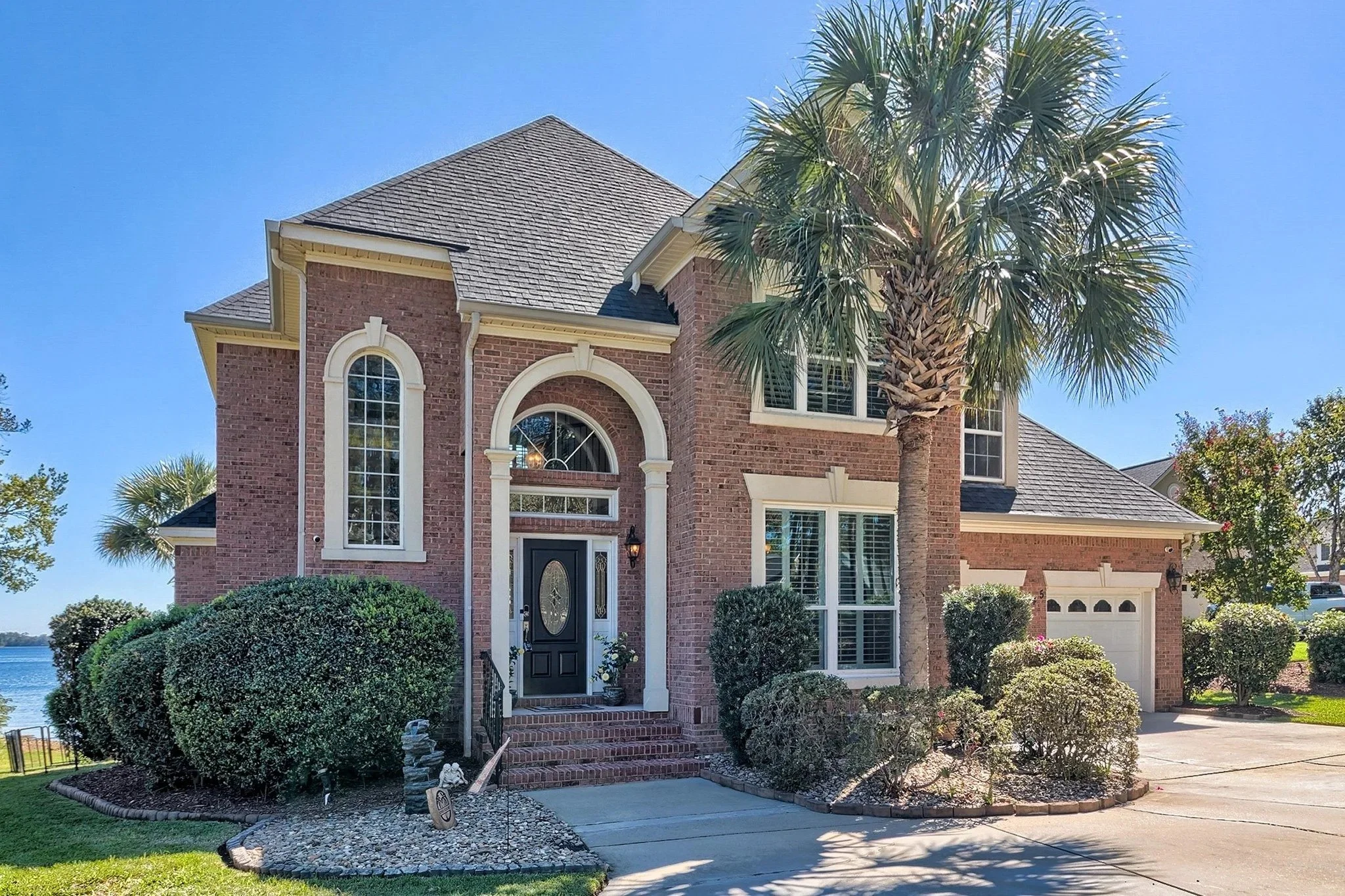
Flood insurance for Lake Murray SC homes is not a detail buyers can defer until closing day. If a Lake Murray property sits within or touches a FEMA Special Flood Hazard Area, any federally regulated or backed lender will require flood coverage before that loan closes. That requirement is not optional, not negotiable, and not something you can sort out after signing a purchase contract. Even homes on lake-access lots outside the mapped floodplain can fall under a lender's internal flood coverage requirements, so zone designation alone does not settle the question.
Flood coverage for Lake Murray homes is not a flat-rate purchase. Zone designation, a home's elevation relative to the Base Flood Elevation, foundation type, distance from the shoreline, and replacement cost all push premiums in different directions. Buyers who navigate this most smoothly check flood zone status before making an offer, understand the difference between NFIP and private coverage, and know how to use an elevation certificate to avoid overpaying for risk the property doesn't actually carry.
Key takeaways
Zone determines mandate: Properties in FEMA Zone AE trigger mandatory flood insurance under federal law; Zone X properties may still face lender requirements based on proximity to the lake.
NFIP caps apply: Standard NFIP policies cover up to $250,000 on the building and $100,000 on contents, regardless of the home's actual replacement cost.
Risk Rating 2.0 prices individually: Your neighbor's premium is no longer a reliable benchmark; FEMA now prices each property based on its specific flood risk factors.
Elevation certificates matter: A completed elevation certificate documents your home's actual elevation and gives your agent the data to rate the policy accurately, a step that often produces a lower quote.
Private carriers offer broader coverage: Neptune, Palomar, and similar carriers can offer dwelling limits in the millions and cover additional living expenses that NFIP excludes.
Timing protects your budget: Discovering a flood insurance requirement at the closing table limits your leverage; identifying it before making an offer keeps the deal on your terms.
What FEMA flood zones actually mean for a Lake Murray property
Zone AE vs. Zone X: the two designations buyers see most often on Lake Murray
Zone AE is the high-risk designation: it marks the 1%-annual-chance floodplain, carries an established Base Flood Elevation, and triggers the federal Mandatory Purchase Requirement for insured loans. Zone X covers the rest of the map, from moderate-risk shaded areas to minimal-risk unshaded ones, with no federal coverage mandate attached. Along the Lake Murray shoreline in Lexington and Richland counties, Zone X is generally the most common designation for developed properties, while Zone AE appears along immediate shoreline stretches, coves, tributary margins, and low-lying areas closest to the water.
Because Lake Murray spans Lexington, Richland, Newberry, and Saluda counties, the applicable Flood Insurance Rate Map varies by address. You can look up any Lake Murray street address at FEMA's Flood Map Service Center to see the current flood zone designation for that specific parcel, a process that often takes only a few minutes. That lookup should happen before any serious offer goes out, not after.
Why lakefront and lake-access properties can carry different flood zone designations
A home directly on the shoreline is far more likely to fall in Zone AE than a home in a lake-access community a quarter mile from the water. Two houses in the same subdivision, on the same street, can carry completely different flood zone designations and completely different insurance obligations. Zone AE vs. Zone X is not simply a matter of how close the water looks on a plat; it's a function of the home's elevation above the Base Flood Elevation, the local floodplain geometry, and the specific FIRM panel that covers that address.
Does your Lake Murray home require flood insurance?
When federal law triggers the mandatory coverage requirement
The federal Mandatory Purchase Requirement applies to any building located in a Special Flood Hazard Area when the mortgage is made, increased, extended, or renewed by a federally regulated or backed lender. The requirement covers the building itself; it does not automatically extend to docks, piers, shoreline improvements, or land. The lender orders a flood zone determination as a standard part of the closing process, and that determination is the trigger: if it places the building in a Zone A or Zone V designation, coverage is required before the loan funds.
One coverage gap that surprises many buyers: NFIP policies exclude docks, boathouses, open structures over water, seawalls, retaining walls, and most outdoor improvements. If a Lake Murray property includes a dock or boathouse, those structures fall outside standard NFIP coverage, and a separate conversation with a private carrier may be necessary.
What lenders require even outside the mapped floodplain
Lenders can and do impose flood insurance as a loan condition on properties near the lake even when FEMA maps show Zone X. Proximity to the water, internal underwriting policies, and the results of the flood determination can all lead a lender to require coverage that federal law does not mandate. Ask your lender in writing whether a flood determination will be required, and ask what its policy is for Zone X properties on or near Lake Murray, before making assumptions based on a general zone lookup.
When coverage is required, the federally recognized minimum is generally the lesser of the outstanding loan balance, the building's replacement-cost value, or the NFIP maximum of $250,000 for a residential structure. A lender can require more and, for high-value lakefront homes, often does.
How much does flood insurance for Lake Murray SC homes cost?
Typical NFIP premium ranges buyers should budget for
For South Carolina properties, Zone X homes typically run roughly $400 to $900 per year through NFIP, while AE-zone properties more commonly land in the $900 to $2,500 range, according to Moore & Associates Insurance. NerdWallet's 2026 analysis of NFIP rates reports a South Carolina statewide average of $764. For a typical non-shoreline Lake Murray home with favorable elevation and no major claims history, Moore & Associates places a reasonable planning estimate in the $500 to $1,000 annual range through NFIP.
FEMA's Risk Rating 2.0 methodology prices each property individually, accounting for distance to water, flood frequency, flood type, foundation characteristics, and replacement-cost value. That shift means your neighbor's premium is no longer a reliable benchmark. Two homes on the same cul-de-sac can carry meaningfully different premiums based on elevation alone.
What drives your Lake Murray flood insurance premium up or down
The single biggest lever is the home's lowest-floor elevation relative to the Base Flood Elevation. A home documented to sit three feet above BFE pays substantially less than one rated at or below it. Foundation type matters too: a slab foundation carries less risk than a crawlspace, which carries less than a basement. Distance from the shoreline, flood zone designation, and prior claims round out the primary rating variables under Risk Rating 2.0.
Collect quotes from both before committing.
NFIP vs. private flood insurance: which makes more sense for your situation?
Feature: Additional living expenses. NFIP: Generally not included. Private carriers (e.g., Neptune, Palomar): Often included.
Feature: Contents settlement basis. NFIP: Actual cash value. Private carriers (e.g., Neptune, Palomar): Replacement cost available with some carriers.
Feature: Basement/detached structure coverage. NFIP: Limited or excluded. Private carriers (e.g., Neptune, Palomar): Broader coverage often available.
Feature: Waiting period. NFIP: 30 days (no wait at closing). Private carriers (e.g., Neptune, Palomar): Typically 7–15 days.
Feature: Lender acceptance. NFIP: Broadly accepted. Private carriers (e.g., Neptune, Palomar): Must confirm with lender in writing.
Feature: Claims funding. NFIP: Federal government. Private carriers (e.g., Neptune, Palomar): Private insurer.
Where NFIP has the edge for Lake Murray buyers
NFIP policies are backed by the federal government, available to virtually any property in a participating community, and broadly accepted by lenders without a separate approval process. The standardized policy terms and the closing-day exception to the standard 30-day waiting period make them predictable tools for buyers who need coverage in place before a loan funds. For most Lake Murray buyers purchasing at or below the NFIP building limit, NFIP is a reliable baseline option that satisfies lender requirements without negotiation.
When private flood insurance wins on coverage and cost
For high-value lake homes where the replacement cost exceeds $250,000, a private policy becomes necessary: NFIP's building cap does not adjust for the property's actual rebuild cost. Private carriers also commonly include additional living expenses if the home is uninhabitable after a flood, replacement-cost contents settlement, and broader coverage for detached structures and basements that NFIP limits or excludes.
The key trade-off is lender acceptance. Always get written confirmation from your lender that a private policy satisfies its flood insurance requirement before switching from NFIP. Ask any agent for a side-by-side comparison that shows building limit, contents limit, deductibles, living-expense coverage, basement and detached-structure terms, waiting period, and lender-acceptance status. That comparison gives you the basis to make an informed choice rather than simply defaulting to whichever quote is lower.
How an elevation certificate can lower your flood insurance premium
What an elevation certificate actually documents
An elevation certificate is a standardized FEMA form completed by a licensed land surveyor, professional engineer, or qualified architect. It records the home's lowest-floor elevation, foundation type, flood zone, and other structural details relative to the local Base Flood Elevation. The certificate does not automatically guarantee a lower rate, but it gives your flood insurance agent the data to rate the policy accurately rather than estimating conservatively. A home documented to sit well above BFE will typically produce a materially lower quote than one rated without that documentation.
How to get an elevation certificate for a Lake Murray property
Start by checking with the county floodplain manager. Because Lake Murray spans Lexington, Richland, Newberry, and Saluda counties, the right office depends on the home's address. Properties required to obtain a certificate during original construction or permitting may already have one on file. Also ask the seller, builder, or previous owner: an existing certificate may transfer with the property and cost nothing to obtain.
If no certificate exists, a South Carolina-licensed land surveyor can complete one. Costs can run higher for crawlspace, pier, or stilt foundations, properties with difficult access, or situations that require multiple site visits. Once the certificate is complete, give it to your flood insurance agent before accepting any quoted premium.
Flood insurance for Lake Murray SC homes: why catching zone status early matters
What happens when buyers learn about a flood zone at the closing table
A flood zone determination that triggers mandatory coverage late in the transaction can delay closing, raise carrying costs beyond what was budgeted, and shift the financial picture of the deal at the worst possible moment. Consider a hypothetical buyer who discovers a substantial annual flood insurance requirement three days before closing, that buyer has very little leverage to renegotiate price, seller concessions, or closing cost credits. The information was always available; it just wasn't gathered in time to act on it.
The straightforward solution is to check the FEMA flood zone designation for every Lake Murray property under serious consideration before making an offer. That lookup is free, takes only a few minutes, and turns a potential closing-day emergency into a known line item you've already budgeted.
How an experienced Lake Murray waterfront specialist identifies flood exposure upfront
Working with an agent who knows the lake is where this process becomes seamless rather than stressful. The Patrick O'Connor Team at Coldwell Banker Realty works with Lake Murray waterfront and lake-access buyers across Lexington, Chapin, Irmo, and the surrounding Midlands communities. The Patrick O'Connor Team offers buyer advisory services.
That kind of hyper-local knowledge turns flood zone status from an afterthought into an informed decision made at the right moment. Buyers know what they're buying, what it will cost to insure, and how to use that information at the negotiating table when it matters.
The bottom line on flood insurance for Lake Murray SC homes
The framework is straightforward: check the FEMA flood zone first, confirm whether your lender will mandate coverage, collect quotes from both NFIP and at least one private carrier, and use an elevation certificate to make sure your rate reflects the property's actual risk rather than a conservative estimate. Flood insurance for Lake Murray SC homes is manageable when buyers approach it with accurate information and the right team behind them.
The move that protects your budget and timeline is identifying flood zone status before signing a purchase contract, not after. Every week spent searching without that information is a week of potential surprises left on the table. Private surveys, lender letters, and insurance quotes all take time; starting that process early gives you options.
Reach out to The Patrick O'Connor Team to start your Lake Murray home search with a full picture of what ownership actually costs, flood insurance included, before you're under contract and negotiating backward.
Frequently Asked Questions
Can my dock or boathouse be covered by standard flood insurance?
No, standard NFIP policies exclude docks, boathouses, open structures over water, seawalls, retaining walls, and most outdoor improvements. If your Lake Murray property includes a dock or boathouse, you need to discuss separate coverage options with a private carrier because those structures fall outside NFIP protection.
Will an elevation certificate I obtain transfer with the property and save me money?
Yes, an existing elevation certificate may transfer with the property and can cost you nothing to obtain if the seller or previous owner provides it. A completed certificate gives your agent the data to rate the policy accurately and often produces a materially lower quote when the home sits above the Base Flood Elevation.
How soon do flood insurance policies take effect if I need coverage before closing?
NFIP policies have a 30-day waiting period but there is no waiting period when coverage is required at closing, while private policies typically have a 7–15 day waiting period. If you expect a lender to require coverage at closing, plan ahead and confirm timing so you have an effective policy in place when the loan funds.
What should I ask my lender about flood insurance for a Lake Murray property?
Ask your lender in writing whether a flood determination will be required and what its policy is for Zone X properties on or near Lake Murray, and get written confirmation if you plan to use a private policy. That written answer tells you whether federal mandatory purchase rules apply, whether the lender will accept private coverage, and what minimum building limit they will enforce before you make an offer.
Local example
See how The Patrick O'Connor Team sold a Lake Murray area home: 1557 Counts Ferry Road, Lexington SC.
Ready to buy or sell? Call The Patrick O'Connor Team at 803-243-0224.